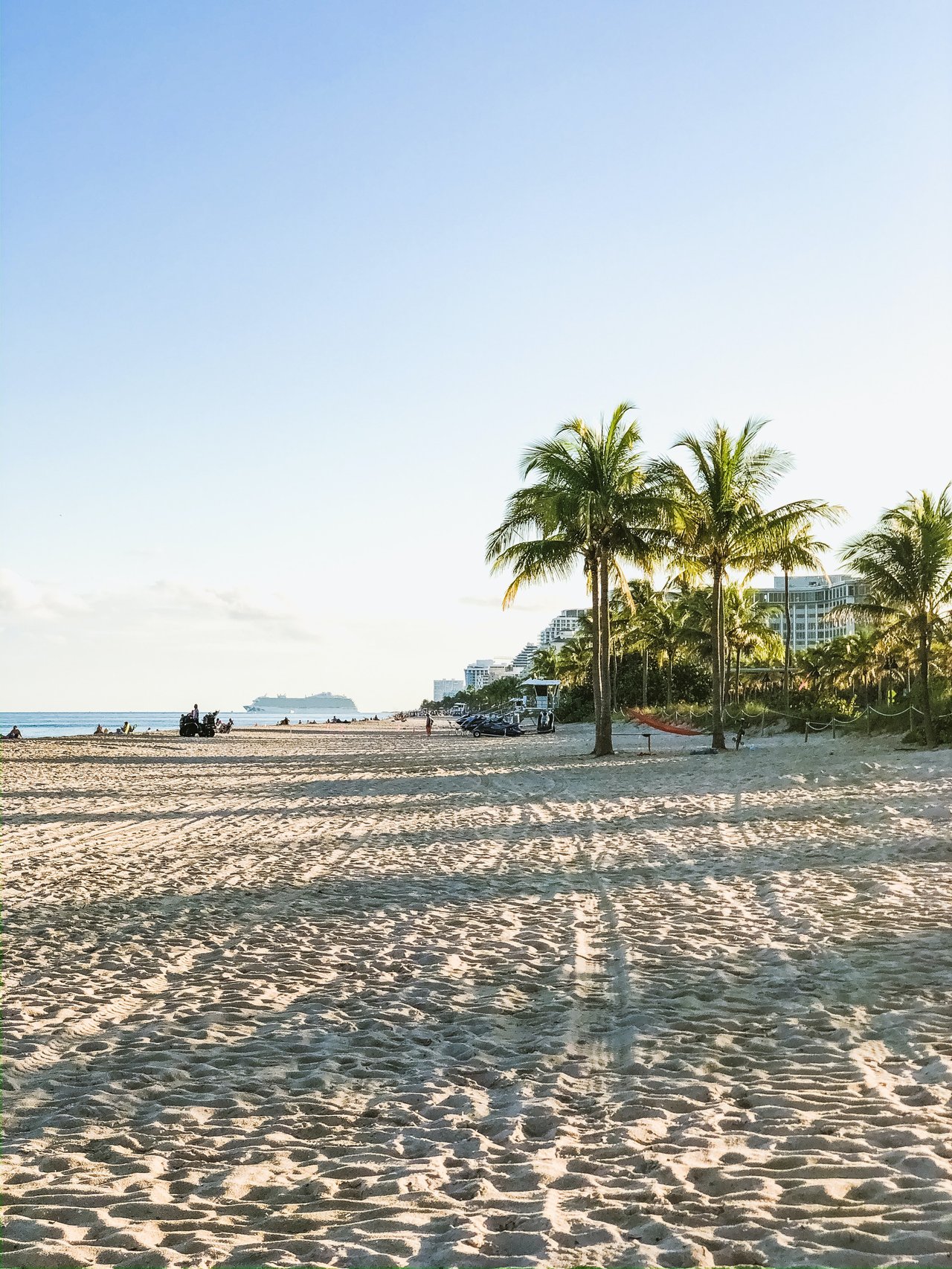
Two lots go up for sale on Hickory Boulevard the same week. Same block, same asking price range, same brokers describing them as "buildable" and "rare." One buyer closes and breaks ground eight months later with a straightforward pile foundation. The other spends that same eight months waiting on a coastal survey, an elevation certificate, and a lighting compliance form before an architect can even finalize the glass wall facing the Gulf.
Nothing on either listing sheet explained the difference. It was already written into the land, in a set of overlapping lines that a buyer only discovers once the survey comes back.
The Line the Listing Sheet Doesn't Show
Bonita Beach sits on Little Hickory Island, a barrier island between Estero Bay and the Gulf of Mexico. Every parcel along Hickory Boulevard sits somewhere relative to Florida's Coastal Construction Control Line, a state-established boundary that marks how far inland storm surge and wave action from a 100-year event are expected to reach. Lee County's own administrative code does not describe this line in the abstract. It names the street directly: property lying seaward of Hickory Boulevard falls inside the control line, subject to a separate layer of state review before a permit can move forward.
That single sentence in county code is the reason two lots with the same list price can carry very different construction paths. A parcel on the bay side of Hickory may sit entirely outside the control line. A parcel with its front door facing the Gulf almost certainly sits inside it, which means the Florida Department of Environmental Protection has jurisdiction over the design before Bonita Springs ever issues a local permit.
Two Zones, Two Budgets
Inside that control line, a second classification does the real work of shaping cost: the FEMA flood zone. Coastal parcels along Bonita Beach generally fall into one of two zones, and the difference between them changes what a foundation is allowed to look like.
| Flood Zone | Foundation | Space Below Flood Elevation | What It Means for a Build |
|---|---|---|---|
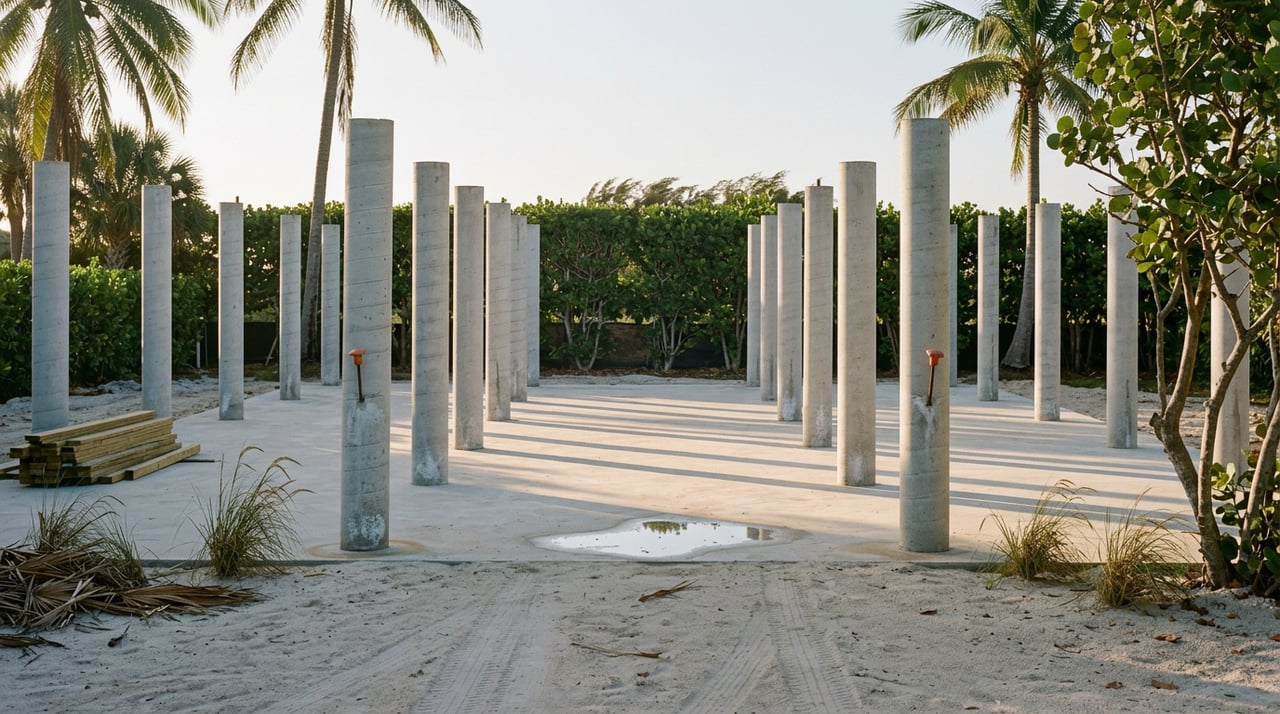
| VE Zone | Open pilings or columns only, walls at grade must be breakaway | Must remain open. No air conditioning equipment, no standard outlets, no bathrooms, no enclosed living space | Loses usable ground-floor square footage, requires deeper engineered pilings |
| AE Zone | Fill or elevated foundation permitted | Enclosed space allowed for parking, storage, or access, with flood vents in the walls | Can enclose a garage or storage room, generally a shorter and less expensive foundation scope |
A lot's flood zone is not something a buyer can guess by standing on the beach. It comes from FEMA's flood insurance rate map for that specific parcel, and it should be confirmed before an architect draws a single line, not after.
There is a third line that gets even less attention: the state's 30-year erosion projection line, which forecasts where the shoreline is expected to sit three decades from now based on historic erosion data. Florida law prohibits new construction seaward of that line, with a narrow exception that allows a single-family home if the line would otherwise block any reasonable use of the property at all, and even then only to the minimum encroachment necessary. Buyers considering a Gulf-front teardown or vacant parcel are well served to have this line surveyed before closing, not after the purchase agreement is signed.
The Permit Nobody Mentions Until the Design Is Already Drawn
Clearing the state's control line and FEMA's flood zone does not finish the list. Bonita Springs, as the municipality with jurisdiction over Bonita Beach, layered on two more requirements specific to the barrier island itself.
The first is the City's Beach and Dune Permit, required under a 2023 ordinance for any addition or change made seaward of the historic 1978 control line, everything from landscaping and irrigation to decks and dune restoration. There is no fee attached to it today, but it is a required step, and skipping it delays certificate of occupancy.
The second is easy to miss precisely because it targets the part of the design buyers care about most: the glass. Any building permit on Little Hickory Island, Big Hickory Island, or Black Island that requires a certificate of occupancy or compliance, and that involves outdoor lighting or glass capable of producing light visible from the beach, must include a completed sea turtle lighting verification. For a market where the entire appeal of a lot is walls of glass facing the Gulf, that is not a footnote. It is a design constraint that belongs on the architect's desk in the first meeting, not discovered during the permit's final review cycle.
The Fee Schedule Changed in January, and It Keeps Changing
Even the paperwork cost of building here shifted earlier this year. Bonita Springs adopted a new building permit fee schedule through Resolution No. 25-129, passed by City Council on October 15, 2025, with the new fees taking effect January 1, 2026 and remaining in place today. The structure is valuation based, a flat base fee for the first increment of construction value plus an additional charge for every thousand dollars above it, which means a multi-million dollar Gulf-front build pays proportionally more in review fees than a modest inland renovation, not a fixed number regardless of scope.
Layered on top of that, Lee County's Board of County Commissioners approved increases to the Fire and Emergency Medical Services impact fee on February 3, 2026. The first scheduled increase took effect May 4, 2026, with additional incremental increases scheduled annually through May 4, 2029. Anyone timing a permit application around a multi-year build should treat that schedule as a real budget line, not a rounding error, because the fee owed depends on when the permit is pulled, not when the project was first priced out.
What the Village Down the Road Already Learned
Regulatory compliance on an individual lot is only half the cost picture. Bonita Beach Village, a covenant of roughly 40 lots on Hickory Boulevard built almost entirely new, has committed to burying its overhead power lines and repaving its streets with curbs and new landscaping, all funded by the community rather than any single lot owner. That kind of collective infrastructure upgrade tends to surface in barrier island communities built up gradually over decades, where the road and utility grid predate the current wave of teardown and rebuild activity. A buyer evaluating a lot inside an established covenant should ask what shared infrastructure commitments already exist, separate from what the individual building permit will require, because both show up in the eventual carrying cost.
Before You Write the Check
Land currently listed for sale on Bonita Beach spans roughly $450,000 to $21 million, a range wide enough that price alone tells a buyer almost nothing about what can actually be built. The regulatory position of the parcel tells the real story. Before making an offer on a Bonita Beach lot, it is worth confirming, in this order: the FEMA flood zone designation for that specific parcel, whether the lot sits seaward of the state control line and therefore requires DEP review, whether the 30-year erosion projection line crosses the buildable envelope, whether a Beach and Dune Permit applies to the planned scope, and whether the design's glazing will trigger the sea turtle lighting verification. Each of those five checks can be done before closing. Almost none of them show up in a standard listing.
FAQ
Is every lot on Hickory Boulevard in a VE flood zone? No. Flood zone designation comes from FEMA's flood insurance rate map for the individual parcel, not from its street address. Gulf-front lots more often fall in VE, while bay-facing or interior lots can fall in AE or outside the mapped hazard area entirely.
Does the 30-year erosion line ever stop a build completely? It can, but state law includes a narrow exception. A single-family residence may still be permitted if the erosion line would otherwise leave no reasonable use of the property, and any encroachment beyond the line is limited to the minimum necessary.
Who actually reviews my permit, the city or the county? Because Bonita Beach sits within the City of Bonita Springs, permits are administered by the City's Community Development Department, not Lee County's building services. State oversight through the Department of Environmental Protection still applies separately for anything seaward of the control line.
Does the sea turtle lighting rule apply if my lot faces the bay, not the beach? The requirement attaches to the barrier island itself, Little Hickory, Big Hickory, and Black Island, and to any permit involving lighting or glass visible from the beach. A bay-facing design with beach-visible glazing can still be captured by the rule.
Buying land on Bonita Beach rewards patience with the paperwork as much as it rewards patience with the search. Potter Trinity works from the builder's side of these questions as often as the buyer's, which means the flood zone, the control line, and the permit sequence get checked before an offer goes in, not after. If you're evaluating a lot on Hickory Boulevard or anywhere else on Bonita Beach, schedule your consultation and we'll walk the specific parcel with you before you commit to it.