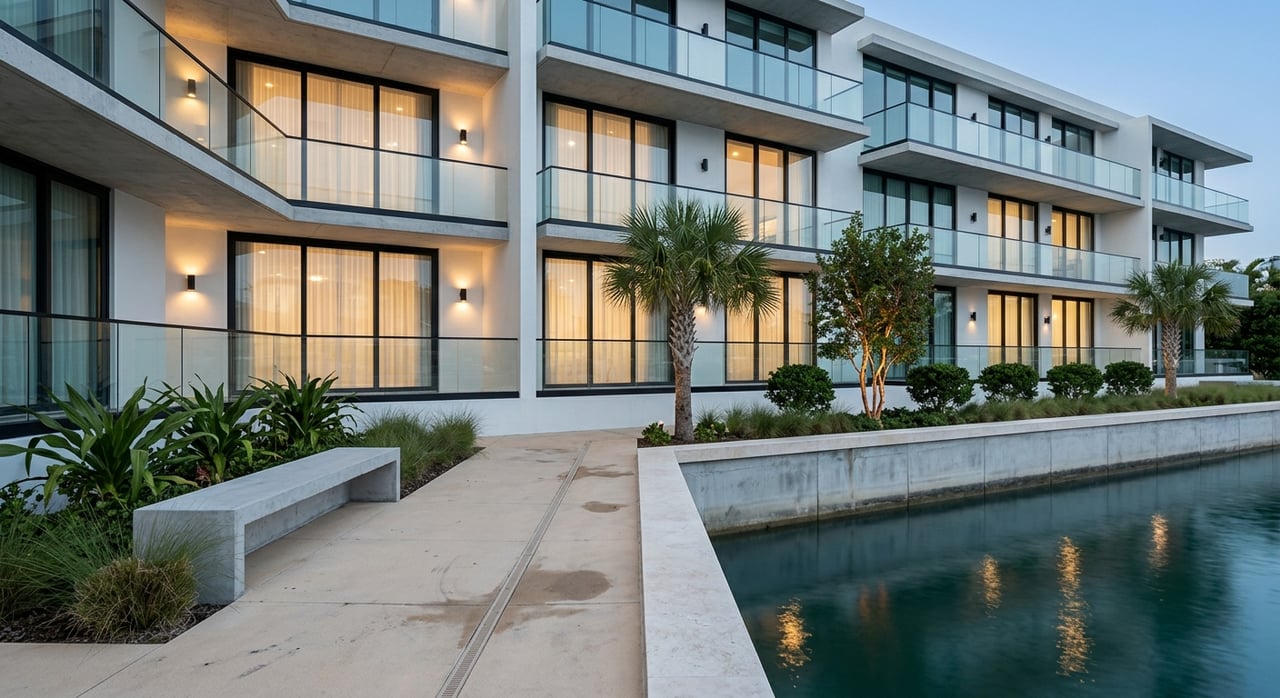
If you have been watching Fort Myers Riverfront homes, you may have noticed something interesting: values along the water are telling a different story than the broader market. Even while Fort Myers and Lee County offer buyers more inventory and more room to negotiate, the downtown riverfront core continues to command a higher price band. For you as a buyer, seller, or investor, that gap matters because it helps explain where demand is concentrating and why. Let’s dive in.
Riverfront redevelopment is bigger than one project
Fort Myers is not treating the riverfront as a handful of separate sites. Public planning documents show a long-running downtown redevelopment framework that links the River District, Centennial Park, the marina, and nearby First Street blocks as one connected corridor.
According to the Fort Myers CRA, the Downtown Plan ties the historic core to riverfront development through projects such as an enlarged marina, improved parks and outdoor spaces, parking structures, and a crescent-shaped detention basin. The downtown redevelopment area page lists the latest plan update as January 2025, with the redevelopment area scheduled through August 2044.
That long timeline matters for property values. When public agencies plan decades ahead, it can give buyers and sellers more confidence that improvements are part of a larger vision rather than a short-term burst of activity.
A more defined riverfront corridor
The riverfront is also becoming more clearly defined in public planning. The CRA’s Innovation Walk solicitation describes the target area as the full waterfront between the Edison and Caloosahatchee bridges, culminating at the Edison & Ford Winter Estates.
For you, that means the riverfront is increasingly being framed as a connected experience. Instead of isolated buildings, the market is seeing a waterfront loop with stronger identity, better continuity, and more visibility.
Public improvements can support value
Several city projects are focused on the spaces between buildings, not just the buildings themselves. Fort Myers’ FY2026-2030 Capital Improvement Program includes River District Gateway, Edison Innovation Walk, Gate Garden Gateway Improvements, Underpass Improvements, and Caloosahatchee Bridge Lighting within CRA downtown projects.
The city describes projects like bridge lighting and Innovation Walk as placemaking efforts that strengthen walkability, connectivity, and sense of place. In real estate terms, those upgrades can improve how the area feels day to day, which can influence how buyers perceive value.
That does not mean every nearby property rises at the same rate. It does mean the riverfront is benefiting from a broader public investment story that can help support premium pricing over time.
Fort Myers data show a premium riverfront submarket
The clearest sign of redevelopment’s effect is in pricing. Realtor.com’s March 2026 data show Fort Myers with about 5,200 homes for sale, a median list price of $334,900, and a median 80 days on market.
By comparison, Downtown Fort Myers shows a median listing price of $419,800, while East 1st Street shows $419,900. Using those figures, Downtown Fort Myers is priced about 25% above the citywide Fort Myers median listing price.
That is an important distinction. The strongest story is not that redevelopment is lifting every Fort Myers neighborhood equally. It is that the riverfront and downtown core appear to be maintaining a premium micro-market inside a more buyer-friendly city and county market.
The broader market still gives buyers options
Lee County data help put that premium in context. Realtor.com reports 26,015 homes for sale countywide, a median listing price of $398,000, 78 days on market, and a buyer’s market designation.
FGCU’s April 2026 regional data also show a market that is active but not overheated. The Cape Coral-Fort Myers metro recorded 1,606 existing single-family sales, up 13.2% year over year, while the median price held steady at $390,000. Lee County active listings were 11,981, down 17.8% year over year.
For you as a buyer, this can create an unusual mix. You may still find negotiating room in the broader market, while the riverfront core holds firmer pricing because of location, public improvements, and lifestyle appeal.
Lifestyle demand is shaping riverfront values
Riverfront pricing is not only about redevelopment plans. It is also about who wants to live there and why.
The downtown riverfront lines up well with several lifestyle-driven buyer groups. Public and market data suggest the area appeals to second-home buyers, seasonal residents, downsizers, and buyers who want a low-maintenance property close to the water, downtown amenities, and boating access.
FGCU reported 915,603 passengers at RSW in April 2026, and Lee County’s real tourist tax revenues reached $3.9 million in March 2026, both above the same period in 2025. Those figures support the idea that Southwest Florida continues to draw out-of-area traffic, which is consistent with second-home and seasonal demand.
Downtown living supports a higher price band
Rental data also point to stronger downtown demand. Realtor.com shows Downtown Fort Myers with a median rent of $2,600, compared with Lee County’s median rental price of $2,195.
That gap suggests many renters are willing to pay more for a central, amenity-rich setting. Even if you are focused on resale rather than rental income, stronger demand for downtown living can add depth to the buyer pool over time.
New development is reinforcing the pattern
Recent and planned product along the river adds another layer to the story. CRA project pages describe Edison Grand as a 24-story, 323-unit luxury residential tower that redeveloped a dilapidated hotel site on the Caloosahatchee River.
Other projects show a similar push toward higher-density, view-oriented, low-maintenance living. ONE is described as a 21-story boutique riverfront tower with 34 units on First Street, while Palmera on the River is a 7-story, 221-unit infill project at the foot of the Edison Bridge. Silver Hills, also called Triton Cay, is a two-building, 327-unit luxury apartment community on West First Street along the river.
For buyers, this mix signals a corridor that is being shaped around waterfront views, walkability, and easier ownership or rental alternatives. For sellers, it helps explain why riverfront property is often evaluated within a more specialized lifestyle market rather than against Fort Myers as a whole.
What buyers should watch next
If you are considering a riverfront purchase, the next value drivers may come less from unit count and more from experience. The Innovation Walk, gateway improvements, underpass upgrades, and bridge lighting all aim to improve how people move through and enjoy the waterfront.
That kind of work can matter because real estate value along the river is tied to more than water views. It is also tied to how connected, walkable, and cohesive the corridor feels.
You should also watch resilience planning closely. The city’s Stormwater Master Plan Update addresses water-quality improvements, sea level rise, increased storm intensity, and long-term flood resilience.
For waterfront property, those issues are not side notes. They affect maintenance expectations, long-term planning, and buyer confidence.
What sellers should understand about pricing
If you own a riverfront home or condo in Fort Myers, redevelopment does not automatically mean you can price without discipline. The broader market still has meaningful inventory, and buyers are comparing opportunities carefully.
At the same time, public data suggest the riverfront core can justify stronger pricing than the citywide median when location, views, building quality, and access align. That makes precise positioning especially important.
A well-informed pricing strategy should account for both sides of the market story:
- The Fort Myers and Lee County market remains relatively well supplied
- Downtown riverfront properties are holding a premium versus the city average
- Lifestyle appeal is supporting demand for central waterfront living
- Public improvements may continue to strengthen the corridor’s identity
Why local guidance matters on the riverfront
Riverfront real estate is rarely a simple comparison exercise. Value can shift based on building type, exposure, view orientation, marina proximity, walkability, redevelopment progress, and long-term resilience considerations.
That is where experienced local guidance becomes especially useful. At Potter Trinity, our boutique advisory model is built for clients who want senior-level attention, clear market insight, and a calm, consultative process when evaluating premium coastal property.
Whether you are buying a waterfront residence, planning a strategic sale, or weighing a riverfront opportunity with development potential, it helps to work with advisors who understand both the lifestyle side of the decision and the practical factors that protect value.
If you want help evaluating Riverfront Homes for sale in Fort Myers, the team at Charles Ruck is here to guide you with clarity, local insight, and a steady process.
FAQs
How is redevelopment affecting Fort Myers riverfront home values?
- Public data suggest redevelopment is helping create a premium submarket in the downtown riverfront core, where median listing prices are higher than the Fort Myers citywide median.
Are Fort Myers riverfront homes still a good option in a buyer’s market?
- They can be, especially if you value waterfront living, walkability, and long-term corridor improvements, but you should still review pricing carefully because the broader market offers substantial inventory.
What public projects are shaping the Fort Myers riverfront?
- Key projects include the Downtown Redevelopment Area Plan, Edison Innovation Walk, River District Gateway work, underpass improvements, bridge lighting, marina-related planning, and park and public space upgrades.
Why do Downtown Fort Myers riverfront properties cost more?
- Current data show the downtown core carries a higher median listing price than Fort Myers overall, likely due to its waterfront setting, redevelopment activity, walkability, and amenity-rich lifestyle appeal.
What should buyers look at beyond views when buying on the Fort Myers riverfront?
- Buyers should consider corridor improvements, building type, access and walkability, maintenance expectations, and city planning around stormwater, flood resilience, and long-term waterfront conditions.