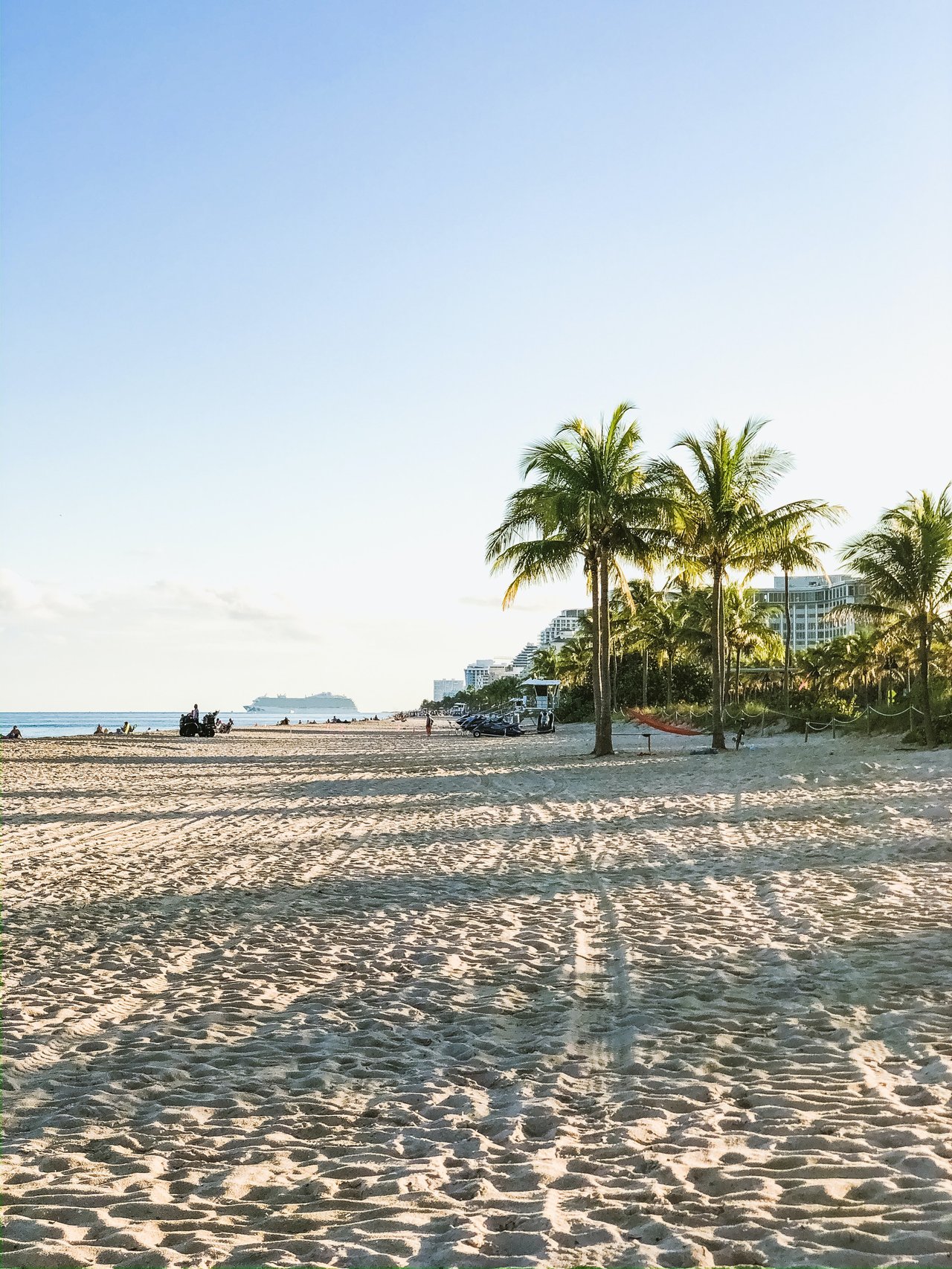
If you are considering new construction on Fort Myers Beach, you are not just buying a home. You are buying into a coastal market where rebuilding, stricter codes, and public improvements are all happening at once. That can create real opportunity, but it also means you need a clear process, the right documents, and strong local guidance. Let’s dive in.
Why Fort Myers Beach New Construction Looks Different Now
Fort Myers Beach is still in a multi-year recovery phase, but the area is moving forward in visible ways. According to the Town’s FY2024-2025 annual report, property values increased 12.3% year over year, beach renourishment is complete, dune planting is ongoing, and the Town continues work related to FEMA and NFIP standing. At the same time, Lee County says the rebuilt Fort Myers Beach Pier is expected to be completed in August 2027, with construction anticipated to begin in late 2026, which adds another layer of long-term public investment to the beachfront corridor. You can review those recovery updates in the Town’s annual report and on the Town’s beach project page.
For you as a buyer, that means today’s beachfront purchase is shaped by both private rebuilding and public improvements. Views, access, traffic flow, and nearby construction activity may continue to evolve while a home is being built or finished. It is important to assess not only the house itself, but also the broader setting you are buying into.
Flood Risk Is a Baseline Issue
On Fort Myers Beach, floodplain concerns are not a side note. The Town states that the entire Town is within a Special Flood Hazard Area, and flood insurance is mandatory in high-risk areas and available through the NFIP. You can see that guidance in the Town’s Build Responsibly information.
The Town also notes that updated flood maps became effective on November 17, 2022. Those maps include both a Coastal A Zone and a Limit of Moderate Wave Action (LiMWA) area, and if a parcel falls into more than one flood zone, the more restrictive designation applies. The Town outlines those standards on its flood information page.
That matters because your insurance costs, design standards, and long-term ownership expenses can all be affected by the exact flood designation of the property. Before you move forward on any beachfront home or lot, the flood zone and base flood elevation should be verified for that specific address.
Elevation Rules Matter More Than Ever
One of the most important standards for new construction on Fort Myers Beach is elevation. The Town’s FAQ says newly constructed or substantially damaged buildings must have the lowest floor elevated to BFE plus 1 foot of freeboard. You can review that requirement on the Town’s elevation FAQ.
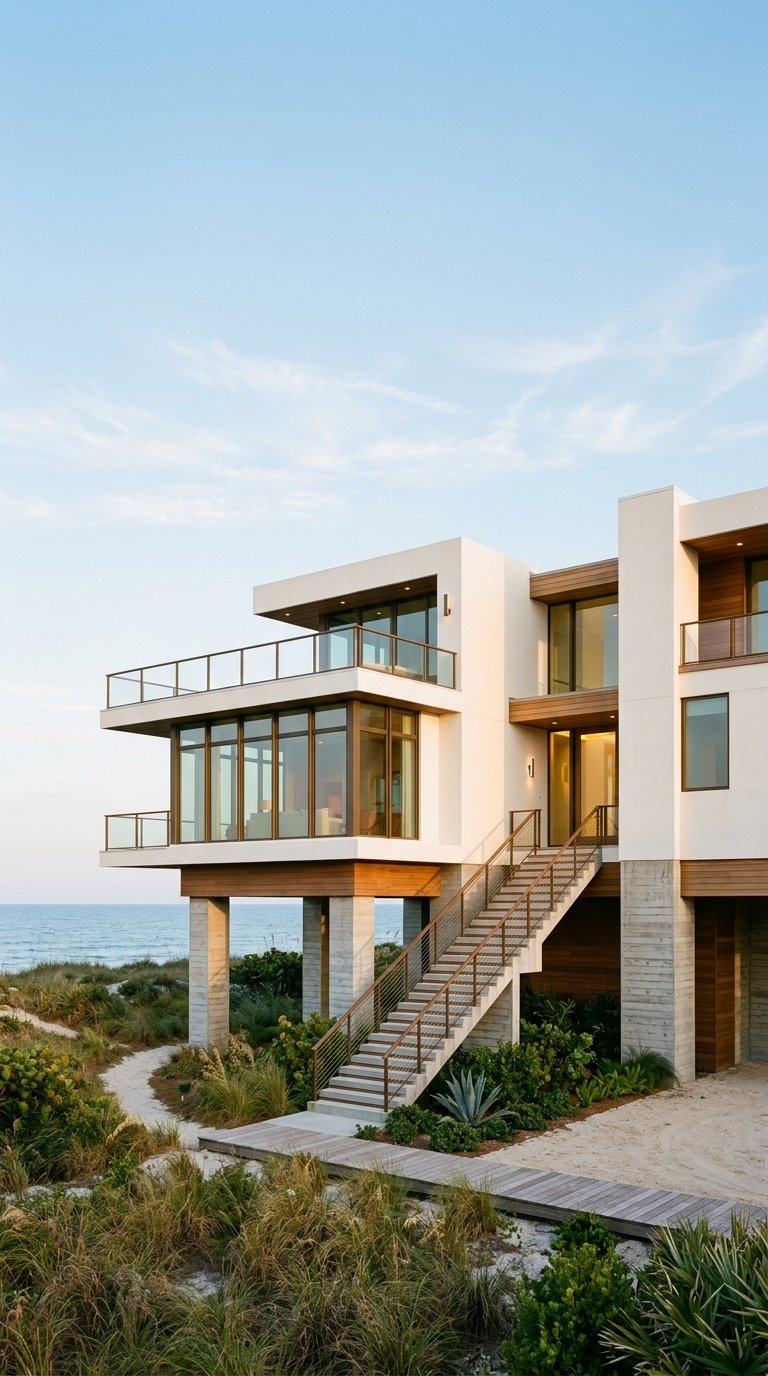
That extra foot can be very important on a barrier island, where storm surge and wave action can exceed mapped minimums. In practical terms, many new homes are being designed with living space elevated well above grade, not with traditional slab-on-grade layouts.
For coastal high-hazard areas, FEMA says buildings in V zones should be elevated above base flood elevation and protected from waves, hurricane-force winds, and erosion. FEMA also notes that these homes are generally elevated on piles or columns, with below-floor areas kept open or built with breakaway walls that can fail without damaging the structure above. FEMA further notes that Coastal A Zones are often best built to V-zone standards, even when not strictly required. That guidance helps explain why many newer beachfront homes now look and perform differently from older coastal construction.
What Resilient Beachfront Design Looks Like
If you are touring a newly built or pre-construction home, resilience should be one of your first filters. FEMA’s post-Ian guidance recommends stronger load paths and connections, corrosion-resistant connectors, and flood-damage-resistant materials below the elevated floor. It also notes that fixed windows and operable windows with compression seals tend to perform better against water infiltration than sliding and double-hung units in wind-driven rain. The Town links to that FEMA advisory here.
A recent local example shows the direction of the market. The Cottages of Paradise Point are reportedly being rebuilt about 15 feet above ground on concrete pilings and include hurricane impact windows and doors along with metal roofs, according to the Business Observer. While every project is different, that example reflects the broader design language many buyers are seeing across the beachfront.
Features to Look For
When you evaluate a new construction opportunity, pay close attention to whether the home includes:
- an elevated first living floor rather than slab-on-grade construction
- pile or column foundations
- an open lower level for parking, storage, or breakaway assemblies
- impact-rated or wind-resistant windows and doors
- metal roofing
- strong roof-to-wall connections
- corrosion-resistant fasteners and connectors
- flood-damage-resistant materials below required elevation
These details are not cosmetic. They can influence durability, maintenance, insurability, and long-term peace of mind.
Know the Code and Permit Framework
Florida’s current building code is the 8th Edition (2023), which became effective on December 31, 2023. You can confirm that through the Florida Building Code portal. That code framework is the baseline for new projects, but beachfront construction also involves additional local and coastal requirements.
For coastal projects, Fort Myers Beach requires a sealed survey showing the Coastal Construction Control Line, flood-zone designation, and existing grade. The Town also notes that Florida DEP authorization is required for construction seaward of the 1991 Coastal Construction Line. In addition, an elevation certificate is required before tie-beam or framing inspection, and an as-built survey is required before a certificate of occupancy, as outlined in the Town’s permit procedures and application requirements.
For you as a buyer, this means the paperwork trail matters. A polished marketing package is not enough. You want to confirm the project has been designed, reviewed, and documented in a way that matches current code and floodplain requirements.
Due Diligence Documents to Request
A Fort Myers Beach new construction purchase should be treated as a document-heavy transaction. The Town’s online permitting process and required site plans mean there is often a substantial file behind the home or lot.
Before you commit, it is wise to request and review:
- the address-specific flood zone and base flood elevation
- the survey
- the elevation certificate
- the foundation survey
- the as-built survey, if available
- the recorded Notice of Commencement
- product approvals or NOAs for windows, doors, shutters, and garage doors
The Town also states in its FAQ page that applications are being accepted and site plans are required for new construction, with professional sealing required when law applies. That makes early document review an important part of avoiding surprises later in the contract period.
Verify the Builder and Licensing
Who is building the home matters just as much as what is being built. Fort Myers Beach states that contractors must be state-licensed through DBPR, that local contractor licenses have been phased out, and that Town-registered contractors must hold the proper state license. You can review that on the Town’s Building Services page.
That is especially important in pre-construction or nearly completed homes where the builder controls the timeline, subcontractors, and paperwork chain. Verifying licensing and permit status can help you understand whether the project is being delivered through a compliant and accountable process.
Understand the 50% Rule
Not every home marketed as rebuilt or updated is the same as true ground-up new construction. Fort Myers Beach continues to enforce FEMA’s 50% rule during plan review. If repair or improvement costs exceed 50% of the pre-damage market value, the structure must be brought into compliance with current floodplain regulations, including the BFE plus 1 foot requirement. The Town explains this on its 50% rule page.
For you, this means storm history matters. Before assuming a property is simply “like new,” it is worth checking whether there was a substantial-damage determination, what work was approved, and whether the home was required to meet full current standards.
Set Realistic Timeline Expectations
Even when a project is well planned, beachfront construction timelines can move differently than inland projects. The Town says a complete application will likely be processed and reviewed within 15 business days, but that is only the initial review window, not the full build timeline. You can find that information on the Town’s FAQ page.
In reality, your timeline may also need to account for surveys, revisions, inspections, utility reconnection, and final occupancy steps. For some projects, land disturbance requirements may add another layer, since the Town requires a stormwater pollution protection plan form for certain permits, including single-family homes and various site improvements.
If you are looking at a condo or a larger mixed-use project, the review process may be more involved. The Town’s Development Services page notes that requirements vary by project type and that a pre-application meeting is suggested for more complex projects.
How to Buy With More Confidence
Buying new construction along Fort Myers Beachfront can be rewarding, but it calls for more than a standard home search. You need to understand the flood zone, confirm the elevation strategy, review the permit file, and evaluate how the home fits into a beachfront area that is still actively rebuilding.
This is also where experienced local guidance matters. A consultative approach can help you compare not just finishes and views, but also code compliance, resilience features, builder credibility, and timing risk. When the purchase involves a premium coastal asset, those details can have a direct impact on both value and peace of mind.
If you are exploring a beachfront lot, a custom build, or a move-in-ready new construction home, Potter Trinity offers a high-touch, senior-level approach shaped by local market knowledge, permitting insight, and builder-connected perspective. If you want clarity before you commit, schedule your consultation and start with a plan built around your goals.
FAQs
What should you verify before buying new construction on Fort Myers Beach?
- You should verify the address-specific flood zone, base flood elevation, survey, elevation certificate, permit status, builder licensing, and product approvals for major components.
Why are Fort Myers Beach new homes elevated so high?
- The Town requires newly constructed or substantially damaged buildings to elevate the lowest floor to BFE plus 1 foot of freeboard, and coastal design standards often push projects even higher for added resilience.
Are all Fort Myers Beach properties in a flood zone?
- Yes. The Town states that all of Fort Myers Beach is within a Special Flood Hazard Area, which makes flood insurance and floodplain compliance central to ownership.
How long does permitting take for Fort Myers Beach new construction?
- The Town says a complete application will likely be processed and reviewed within 15 business days for the initial review, but the full timeline can be much longer due to revisions, inspections, and final occupancy steps.
What design features are common in newer Fort Myers Beach beachfront homes?
- Many current projects emphasize elevated living areas, pile or column foundations, impact-rated openings, metal roofs, corrosion-resistant connectors, and flood-damage-resistant materials below the required elevation.