If you are building or rebuilding on Sanibel or Captiva, safety is only part of the equation. You also need to navigate flood rules, coastal protections, permitting timelines, and construction steps that can quickly affect your budget and schedule. The good news is that with the right planning, you can move forward with more confidence and fewer surprises. Let’s dive in.
Start With the Right Jurisdiction
One of the first steps is knowing which local authority controls your project. Sanibel and Captiva may feel similar on the map, but they do not follow the same permitting path.
On Sanibel, new construction and structural exterior work must go through Planning first and then Building. The City of Sanibel notes that permit applications are usually reviewed in 7 to 10 business days, though a complete submittal can take up to 30 business days according to its permitting information page.
On Captiva, permitting falls under unincorporated Lee County. That means Lee County Community Development handles planning, zoning, development services, plan review, inspections, and code enforcement.
For both islands, the current code baseline is the Florida Building Code, 8th Edition (2023). That matters because your plans, inspections, and flood-compliance details all need to align with that code framework.
Flood Rules Shape the Build
On barrier islands, flood compliance is not a side issue. It often drives the design, construction method, and even whether a remodel remains a remodel.
In Lee County, structures in Special Flood Hazard Areas need a FEMA Elevation Certificate at multiple stages. The county says it is required before vertical construction, before the first permanent horizontal member is placed, and again at final construction. Coastal A Zone and VE-zone structures may need additional certificates.
Sanibel adds more checkpoints for single-family homes. Its permit checklist says the during-construction elevation certificate must show the structure meets elevation requirements, and the framing inspection will be withheld until documents such as the survey, pile report, and truss certification are approved through the city’s permitting process.
What freeboard means
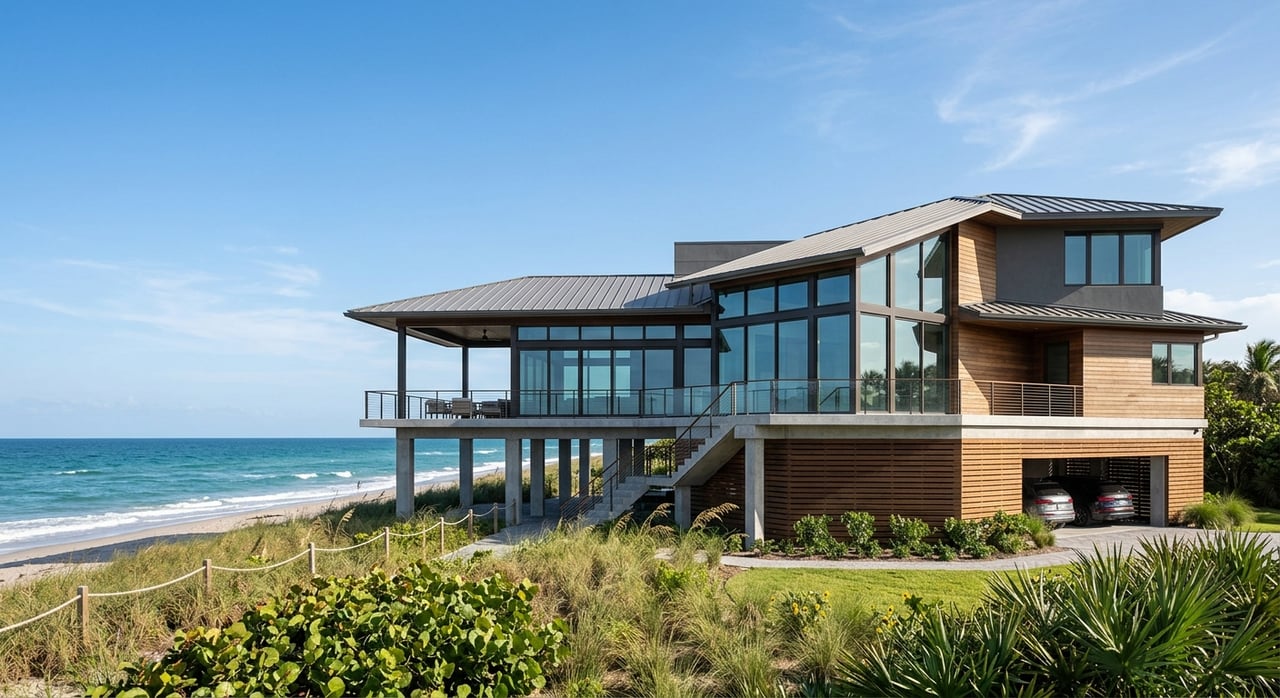
Lee County describes freeboard as the FEMA base flood elevation plus 1 foot. In practical terms, that extra height can affect foundation design, stairs, access points, parking below the home, and overall construction cost.
Sanibel’s checklist also treats areas below BFE as limited-use space. Those lower areas are generally for parking, storage, or access only, and flood-zone construction may require hydrostatic openings or breakaway-wall details. The city also requires flood-damage-resistant materials below BFE+1.
Know the 50% Rule Before You Remodel
Many owners ask whether they can renovate instead of rebuilding. Sometimes you can, but the answer depends heavily on flood rules and the scope of work.
Lee County defines substantial damage or substantial improvement as work or damage that equals or exceeds 50% of the structure’s market value. If your project crosses that threshold, flood-compliance upgrades can be triggered, even if your original goal was simply to renovate. You can review that framework on the county’s flood information page.
This is one of the most important planning points for buyers and owners evaluating island property. A home that looks like a cosmetic update opportunity may actually require a more extensive compliance path once plans, valuations, and flood-zone details are reviewed.
Barrier-Island Design Has Extra Requirements
Captiva projects come with additional coastal design requirements that can affect both timing and team selection. On barrier islands, Lee County requires sealed plans prepared by a Florida architect or engineer.
The county also requires a certified survey that addresses both the coastal construction zone and the flood zone. For projects in coastal areas subject to sea turtle, coastal construction, or flood-hazard rules, the county requires a code-compliance statement as outlined in its residential permitting guide.
This is one reason island projects benefit from early coordination. Surveyors, design professionals, builders, and your real estate advisor all need to be working from the same property facts before you commit to budget, timeline, or closing strategy.
Coastal Protections Affect Design Choices
Building safely on Sanibel and Captiva also means respecting the environmental protections that shape what can be built and how sites are maintained. These rules are not just background policy. They can directly affect your plans for lighting, vegetation, walkways, and site improvements.
Florida’s Coastal Construction Control Line program regulates structures and activities that can cause beach erosion, destabilize dunes, damage upland properties, or interfere with public access. The program also helps protect sea turtles and dune vegetation.
Sanibel beach and dune rules
On Sanibel, the city uses the CCCL as the landward boundary of its Gulf Beach Zone. According to the city’s beach and dune protections page, the native plant community is considered critical to stabilizing the area seaward of the line.
Sanibel requires a vegetation permit for trimming or removing vegetation seaward of the CCCL, prohibits removal of native species, and limits new structures seaward of the CCCL to elevated dune walkways. The city also restricts invasive exotics and requires permits for certain work involving protected native trees, shrubs, mangroves, and other vegetation as explained on its exotic vegetation guidance.
Captiva lighting and landscaping rules
On Captiva, lighting rules are a major design issue, especially near coastal habitat. Lee County enforces sea turtle lighting rules that require shielding lights visible from the beach during nesting season and prohibit direct or indirect illumination of the beach.
Captiva’s own ordinance adds more detail. New lights, including dock and bulkhead lights, must be hooded or shielded, cannot create light trespass, and pole or tree fixtures must be no more than 15 feet above grade and directed downward under Ordinance 21-10. That same ordinance also promotes native or Florida-friendly landscaping and heritage-tree preservation for certain projects.
Sea Turtle Season Matters
On both islands, sea turtle protections can influence how you use and light the property. This is especially important for owners planning a rebuild, a new outdoor lighting package, or changes near the beach and dune line.
Sanibel states that sea turtle nesting season runs from May 1 through October 31, and local ordinances prohibit interior and exterior lights from illuminating the beach year-round according to the city’s sea turtle guidance. The city also asks residents to remove beach furniture and similar items from the beach and dune area at night.
Even if your home is not directly on the sand, these rules can still matter. Sanibel and Captiva both regulate lighting and vegetation in ways that may affect lots near beaches, dunes, and coastal habitat.
Permitting Timelines Depend on Sequence
A smooth project usually comes down to sequence. When documents are prepared in the right order, you reduce the risk of delay, corrections, and repeat inspections.
For Lee County projects, contractors are encouraged to use digital filing through eConnect, while paper applications are limited to owner-builders. The county’s Residential Building Guide explains that electronic submittals can be reviewed simultaneously by required reviewers, while paper applications move one reviewer at a time.
Lee County also notes that a recorded Notice of Commencement is often required before permit issuance. If the project uses a septic system, the septic permit must be obtained before the building permit submittal and finalized before certificate of occupancy.
Sanibel has its own inspection cadence. The city requires a structural inspection within the first six months of permit issuance, another approved inspection every six months after that, and warns that a permit can expire after six months without an approved or partially approved inspection unless extended by the Building Official.
Lee County follows a similar clock. Issued permits must pass at least one inspection within 180 days or they expire, and job-site access, approved plans, and related documents must be available during inspections.
A practical order of operations
For many island builds or rebuilds, the process works best when you line up the basics early:
- Confirm the property jurisdiction and flood zone.
- Order the survey and review coastal constraints.
- Engage a Florida architect or engineer if required.
- Prepare sealed plans and flood-compliance details.
- Secure septic approvals if applicable.
- Record the Notice of Commencement when needed.
- Schedule elevation-certificate milestones and inspections on time.
That sequence can save time and reduce rework, especially on teardown projects, custom homes, and lot purchases where your construction path is part of the buying decision.
Construction Site Compliance Matters Too
It is easy to focus on plans and overlook on-site requirements, but those details matter. Sanibel requires a silt fence, sanitary facilities, a city-approved trash container, and contractor licensing and insurance compliance during construction.
The city warns that failures in these areas can lead to a stop-work order. It also notes that work beyond the approved scope can trigger a stop-work order and possibly demolition if it creates a substantial improvement issue.
Insurance Should Be Part of Early Planning
Insurance planning should happen before you finalize your budget, not after permits are in motion. On coastal property, flood and wind coverage can materially affect your carrying costs.
FEMA FloodSmart explains that high-risk A and V zones require flood insurance for federally backed mortgages. The same planning point matters because standard homeowners policies do not cover flood damage, and coverage structure can differ from what buyers expect.
For Captiva buyers in unincorporated Lee County, the county says properties in A, AE, and V zones may qualify for a 25% NFIP discount under its CRS program, with a 10% discount in X zones, as outlined on the county’s flood page. Final premiums still depend on the property and policy, but this can be a meaningful budgeting factor.
Why Local Advisory Can Reduce Risk
Island property decisions often involve more than location and design. They also involve permitting pathways, flood thresholds, environmental constraints, inspection timelines, and insurance considerations that can shape the true cost of ownership.
That is why many buyers, sellers, and lot owners benefit from an advisory team that understands both the real estate side and the construction side. When your property search, due diligence, and build planning work together from the start, you can make decisions with more clarity and less stress.
If you are considering a lot purchase, teardown, rebuild, or luxury coastal home on Sanibel or Captiva, Potter Trinity offers a consultative, high-touch approach backed by local market knowledge and builder-aligned insight to help you move forward with peace of mind.
FAQs
What permitting authority handles a rebuild on Sanibel?
- On Sanibel, new construction and structural exterior work typically go through the City of Sanibel Planning review first and then Building review.
What permitting authority handles a rebuild on Captiva?
- Captiva is in unincorporated Lee County, so Lee County Community Development handles planning, permitting, inspections, and code enforcement.
What building code applies on Sanibel and Captiva?
- Both islands currently use the Florida Building Code, 8th Edition (2023) as the code baseline referenced in local permitting materials.
What is the 50% substantial improvement rule in Lee County?
- Lee County defines substantial damage or substantial improvement as work or damage equal to or greater than 50% of the structure’s market value, which can trigger flood-compliance upgrades.
What is an elevation certificate for a Lee County coastal project?
- In Special Flood Hazard Areas, Lee County requires FEMA Elevation Certificates at key stages of construction, including before vertical construction and again at final construction.
Do lighting rules matter for homes near the beach on Sanibel or Captiva?
- Yes. Both islands regulate lighting to reduce impacts on sea turtles and coastal habitat, and those rules can affect homes near the beach even if they are not directly beachfront.
Can you build below base flood elevation on Sanibel?
- Sanibel treats areas below BFE as limited-use space such as parking, storage, or access, with additional flood-related construction requirements for those lower areas.
Why do Sanibel and Captiva rebuild timelines often take longer than expected?
- Island projects can require planning review, sealed plans, flood documents, elevation certificates, environmental compliance, utility or septic verification, and inspections that must stay current throughout construction.